Table of contents7 sections
- A reliable forecast is not a static spreadsheet
- Why does an ordinary spreadsheet often fail to show the real cash flow?
- What should a cash flow forecast take into account?
- How to build a reliable forecast?
- How does Administy automate cash flow forecasting?
- A cash flow forecast should support decisions
- Summary
A reliable forecast is not a static spreadsheet
Issued invoices, forecast sales and the current account balance are not enough to judge whether, in a few weeks, the company will have the funds for salaries, taxes and payments to suppliers.
A reliable cash flow forecast should show not only how much the company will earn, but above all: when the money will actually arrive in the account and when it will have to be spent.
In many companies this overview is still put together by hand. Data is pulled from the invoicing software, online banking, the project system and individual employees’ spreadsheets. The result is several hours of work, and sometimes a whole weekend spent updating Excel.
The problem is that such a forecast can be out of date as early as the next day.
Why does an ordinary spreadsheet often fail to show the real cash flow?
The most common mistake is to assume that the client will pay exactly on the due date shown on the invoice.
In practice one business partner pays a few days early, another is regularly two weeks late, and yet another settles receivables only after a reminder.
Costs work the same way. Not all cost invoices reach the company at the same time. Some expenses are fixed, some depend on the projects being delivered, and some appear unexpectedly.
That is why a forecast based solely on invoice due dates may look good but fail to reflect the real situation in the account.
What should a cash flow forecast take into account?
A sound forecast should combine at least four groups of data.
Planned inflows
It should include invoices already issued, planned invoicing, subscriptions, advance payments and milestone payments.
Actual client behaviour
It is worth adjusting the formal payment term for the payment history of a specific business partner. If a client has paid 12 days late on average over the last few months, the next payment should not automatically be planned for the date shown on the invoice either.
All payables
The forecast should cover salaries, taxes, contributions, supplier invoices, subcontractor costs, instalments, subscriptions and project expenses.
Planned costs without an issued invoice
The absence of a cost document does not mean the cost will not arise. If the company knows that a subcontractor will issue an invoice after the project is completed, the expense should appear in the forecast earlier.
How to build a reliable forecast?
The first step is to gather data on receivables, costs and bank transactions in one place.
Then you need to determine:
- which inflows are certain and which are only planned
- when clients are likely to pay
- which costs are recurring
- which cost invoices the company is still waiting for
- which projects will need additional funding
- how much must be kept aside for taxes and salaries
The forecast should be updated regularly. The point, however, is not to retype every transfer by hand, but to feed it automatically with current data.
How does Administy automate cash flow forecasting?
Administy brings together data from invoices, bank accounts, costs and projects. As a result, the forecast does not have to be built from scratch in a spreadsheet.
Among other things, the system helps to:
- monitor paid and unpaid invoices
- analyse the payment history of business partners
- predict the more likely inflow dates
- detect recurring expenses
- include planned costs for which the company has not yet received an invoice
- compare the financial result with the actual cash flow
- point to future periods at risk of a cash shortfall
Thanks to the banking integration, payments and expenses can be matched to documents automatically. The forecast updates as the company’s situation changes, instead of remaining a static spreadsheet prepared a few days earlier.
A cash flow forecast should support decisions
A good forecast is not a report prepared solely for the accounting department. It should answer the business owner’s specific questions:
- Will there be enough funds for salaries?
- Which payments could threaten liquidity?
- Can we start a new project?
- Should the client pay an advance?
- Can we afford a longer payment term?
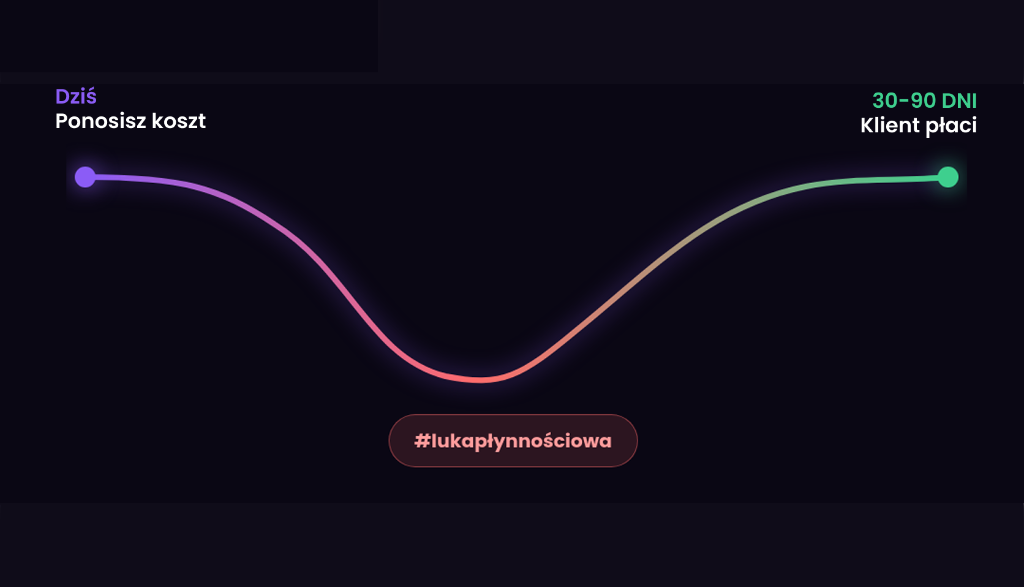
- When will a cash gap appear?
The earlier the company sees a potential shortfall, the more options it has. It can speed up invoicing, ask for an advance payment, postpone an expense, start recovering receivables or change the project schedule.
Summary
A reliable cash flow forecast should not rely solely on the account balance and the dates written on invoices.
It must take into account clients’ real payment behaviour, future payables, project costs and expenses that have not yet appeared in documents.
Administy automates the collection and updating of this data. This allows the company to assess its future liquidity faster, make decisions based on current information and cut the time spent manually updating Excel.
A manual cash flow forecast is out of date the day after it is made. Decisions taken on its basis are decisions based on past data.